The MICE industry is undergoing rapid transformation, shaped by geopolitical uncertainties, economic volatility, and accelerating AI-driven disruption. Themed “Going Beyond”, SMF 2026 challenged the industry to unlearn traditional models, push curiosity beyond comfort zones, and rethink leadership, value, and impact — from redefining “heartware” leadership to navigating a world where chaos is the new normal.
The forum explored how MICE companies can build resilience and agility, create high-performance teams, and respond to a landscape where value has replaced loyalty. As AI transformation reshapes work and business models, conversations examined the rise of one-person unicorns, the balance between creation and management, and whether AI is enabling more — or making us think less.
Bringing together MICE and industry leaders from Singapore and across the region, SMF 2026 provided a platform for collaboration, knowledge exchange and meaningful conversations — encouraging the industry to go beyond conventional thinking and explore what lies ahead for the MICE industry.
9:00AM - 9:10AM Opening of Singapore Mice Forum 2026
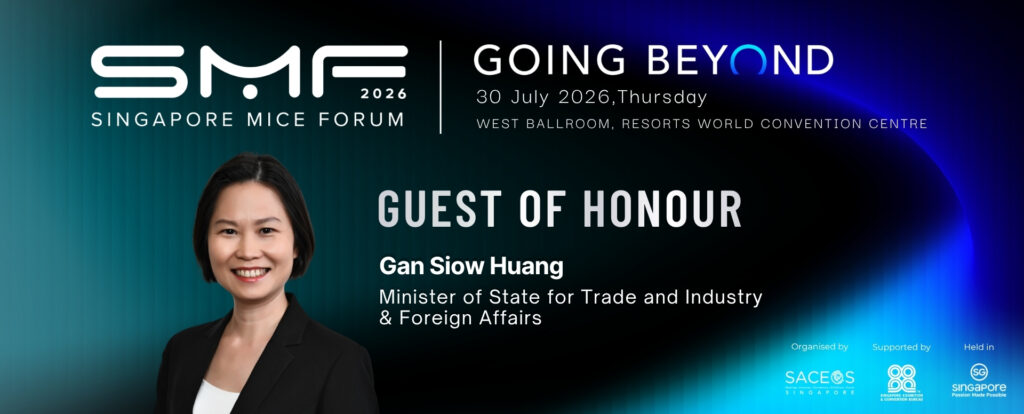
9:10AM - 9:20AM Opening Address by Gan Siow Huang, Minister of State for Trade and Industry & Foreign Affairs,
9:20AM - 9:30AM Welcome Address by Mr Richard Ireland, President, SACEOS & Ms Jasmine Ho, SMF Chairperson and VP of Community, SACEOS
9:30AM - 10:15AM Opening Keynote by Mr Tan Chuan-Jin on Going Beyond the Hardware and Software, Towards Heartware
Take a moment and imagine the strategy map of your organisation or event. While we thrive as a company that is built on comprehensive infrastructure, good governance and clear policies, how does “heartware” come into play? Strategic leadership that balances the use of hardware with optimal utilisation of human talent do not guarantee the leader our hearts, our passion, our “going beyond”. Can you now imagine the quantum leap and transformation in your organisation and even if all hearts are aligned, a team that serves not just the bottom line?
Keynote Speaker: Tan Chuan-Jin
Moderator: Jasmine Ho, SMF Chairperson and VP of Community
10:15AM - 11:00AM Panel: Chaos Is The New Normal - Who Actually Benefits?
Recent global uncertainties have thrown all business plans out the window. While many business leaders take a wait-and-see approach, can we still survive if nothing holds or changes? In this panel, global thinkers will share how Asian businesses can capitalise on the current chaotic landscape to carve a pathway for growth.
Panelists
Kelvin Wong, Group Chief Commercial Officer & Region Head, Asia, SJ Group
Lim Wai Mun, Founder & Chief Executive Officer, Doctor Anywhere
Ong Tze Boon, Group Executive Chairman, ONG&ONG
Moderator
Elaine Chia, Chief Executive Officer, Asia Pacific Comexposium Group
11:00AM - 11:45AM Panel: Lazy or Liberated - Has AI Made Us Think Less, or Free Up Space to Do More?
With AI permeating almost every layer of work, personal life, and education—and its ability to provide immediate feedback through a near-personification of intelligence—many people are beginning to over-rely on it. Do we implement and use AI for the sake of it because of the risk associated with not using it? Do all these ‘conveniences’ then make us lazy and thus stop creating, but just managing? There is growing research and evidence showing that this cognitive offloading does impact critical thinking that requires active cognitive engagement to analyze, evaluate, and synthesize information. Are we getting dumber???
Panelists
Mohan Belani, CEO and Co-founder, e27
Rachel Teo, Lead, APAC Alliances, Google DeepMind Impact Accelerator
1:15PM - 2:00PM Panel: The Future of Work: Humans Optional?
It should never be mutually exclusive – the rise of “One-Person Unicorns” and the threat of mass unemployment represent two sides of the same AI-driven coin. We are entering an era where the leverage of a single human has never been higher, but the floor for traditional employment has never been more fragile. Technology isn’t just taking jobs; it’s changing the unit of production from the team to the individual.
Panelists
Christophe Al-Taie,Head of Events & Brand Experience, Asia Pacific JLL
Ong Huey Hong, Assistant Chief Executive, Industry Development Group, Singapore Tourism Board
Su-Ren Neo, Group Head of Marketing & Director, Asia Pacific, LSS, LinkedIn
Moderator
Sukumar Verma, Honorary Secretary, SACEOS
2:00PM - 2:45PM Panel: Leadership: Functional, Catalyst, Unifier, or King?
Managing high-performance teams requires a shift from traditional supervision to strategic orchestration. It is the art of aligning elite individual talents into a singular, cohesive force that consistently delivers exceptional results. The core of this management style lies in fostering an environment of psychological safety where innovation can flourish without the fear of failure. Effective leaders of these teams focus on extreme clarity—ensuring every member understands not just their tasks, but how their specific output fuels the overarching mission.
Panelists
Jesher Loi,Director, Branding & Market Development, Ya Kun International
Ollie Wang, Director, REVL Training Singapore
Stuart Wee, Co-founder, Andsoforth
Moderator
Idris Jonathan Cheetham, SMF 2026 Organising Committee Member, SACEOS
2:45PM - 3:30PM Panel: What Sticks? Value & Loyalty?
The “Good Enough” concept has plateaued, given the multitude of cheaper alternatives and some even come with better value or outcome. Consumers are no longer “loyal” to names; they are loyal to the demonstrated benefit they receive in every transaction. Loyalty has been redefined, the “Value Economy” is here to stay. This session explores how the traditional social contract between brands and buyers has been rewritten, moving from a foundation of historical trust to one of relentless, real-time performance. So then what are the new “service wrappers” can businesses offer to sustain a longer fight or to even defend your margins?
Panelists
Choe Peng Sum, Chief Executive Officer, Pan Pacific Hotels Group
3:30PM - 4:15PM Panel: Is the Creator Economy here to stay?
Over the last 25 years we have gone from the knowledge economy, gig economy to the value economy. Is the creator economy here to stay? Is that even at all possible in this day of instant gratification and value-based consumption? What do creators do to remain relevant and financially sustainable?
Panelists
Ian Loon, Chief Executive Officer, Media & Digital, Singapore & Chief Transformation Officer, Southeast Asia, Publicis Groupe
Kelvin Tan (Mayiduo), Chief Executive Officer, DU Media Holdings
Xiong Lingyi, Co-founder & Director, 01 Studio (Wah!Banana)
Moderator
Adam Oei, Co-Founder, IMBA
4:15PM - 5:00PM Panel: Purpose-Driven Meaningful Businesses – Do they Really Exist?
This panel examines the shift toward mission-led operations, arguing that purpose-driven leadership attracts talent and deepens customer loyalty through the Triple Bottom Line. It highlights how companies or individuals are evolving into catalysts for social change and the bigger good, fostering resilient, value-driven organizations over profit-first models.
Angela Tan is the Executive Director of ART:DIS (Arts & Disability Singapore), a non-profit organisation dedicated to creating learning and livelihood opportunities for persons with disabilities through the arts. Since joining the organisation, she has led efforts to strengthen artistic pathways for disabled artists, and expand their visibility and participation within Singapore’s cultural landscape.
Prior to ART:DIS, Angela spent over a decade at the National Arts Council, where she led major initiatives including Singapore Art Week, the Civic District development, and the Public Art Trust. She also played a role in developing funding and capability-building initiatives that supported arts-based work in the social and healthcare sectors.
At ART:DIS, she has championed partnerships with brands, businesses, cultural institutions and government agencies to unlock new opportunities for disabled artists to showcase their work, develop their practice, and strengthen pathways towards creative livelihoods. She is passionate about advancing social equity (not charity), and believes organisations can unlock new possibilities for social impact when they see persons with disabilities as contributors, not beneficiaries.
Adam is the Co-Founder of IMBA, Singapore’s pioneering immersive arts and entertainment destination at Gardens by the Bay. With a background spanning media, communications and business development, he works at the intersection of art, technology and experience—bringing together artists, cultural institutions and global brands to create ambitious new ways for audiences to encounter and engage with art.
Prior to founding IMBA, Adam held leadership roles across the creative, lifestyle and experiential sectors, where he developed a strong track record in shaping distinctive and unique experiences that unite storytelling, culture and meaningful audience engagement.
Guided by the belief that art and culture should be accessible, participatory and compelling, Adam is committed to establishing IMBA as a leading platform for immersive art and culture in Asia, while contributing to Singapore’s growing position on the global cultural and entertainment stage.
Christophe is the Head of Events & Brand Experience, Asia Pacific at JLL, where he plays a pivotal role in driving impactful, measurable customer engagement programs. As the regional subject matter expert in events, sponsorships, and partnerships, he supports brand building, demand generation, and operational excellence across the firm. Known for his collaborative approach, Christophe works closely with cross-functional teams to deliver innovative, high-quality marketing solutions aligned with business objectives.
With over 21 years of experience spanning commercial real estate, sports marketing, advertising, and intergovernmental organizations, he brings deep expertise in integrated marketing campaigns, events, and sponsorship strategies. He has a strong track record of leveraging partnerships to deliver both commercial and social impact, across diverse markets and economic cycles.
Originally from France and based in Singapore, Christophe has spent over two decades in Asia, developing strong cross-cultural leadership skills while managing projects across Asia, the Middle East, and Europe.
Chloe Tong co-founded ACE Team Foundation on a simple belief: that children and young people deserve to grow up in environments that are safe, kind, and genuinely supported.
The Foundation’s flagship initiative is the #STOPbullying movement – a ground-up effort bringing together parents, teachers, youth workers and community advocates to address hurtful behaviour through empathy, early action and shared responsibility. Through the ACE Collective, it works alongside schools and social service organisations to drive lasting cultural change around youth wellbeing.
She serves as Executive Director of The Edge Singapore and as an Advisor to Grab, Southeast Asia’s leading superapp. Chloe holds a Bachelor of Commerce and Economics (Honours) from the University of British Columbia and an Executive MBA from Tsinghua University. She is married to Anthony Tan, Co-Founder and CEO of Grab, and together they have five children.
Mr. Choe Peng Sum joined Pan Pacific Hotels Group as the Chief Executive Officer of Pan Pacific Hotels Group (PPHG) in 2019. He is responsible for shaping the overall strategy of PPHG including overseeing the global expansion, development and management of more than 50 hotels, resorts, and serviced suites under the Pan Pacific, PARKROYAL COLLECTION, and PARKROYAL brands across 30 cities in Asia Pacific, Europe, and North America.
An industry veteran and visionary with a proven track record of bringing Singapore brands onto the global stage, he has consistently been at the forefront of major transitions in the hospitality sector, championing sustainability initiatives and collaborating with institutions to research and develop the future blueprint for Singapore’s hospitality industry.
Before joining Pan Pacific Hotels Group, Mr Choe served as the Chief Executive Officer of Frasers Hospitality International from 1996 to 2019 where he built an international infrastructure and grew the global portfolio to more than 150 serviced residences and hotels across 80 cities. Prior to that, he worked with Shangri-La Hotels & Resorts.
Elaine Chia is Chief Executive Officer, Asia Pacific at Comexposium Group, where she leads the Group’s development across key markets including China, Southeast Asia, Japan, India, and Australia & New Zealand.
With over 20 years of experience in the media, events and exhibitions industry, Elaine has built and scaled business platforms that connect industries, facilitate trade, and foster meaningful business relationships across the region. Her career spans marketing, data analytics, exhibitions, and executive leadership, giving her a broad perspective on how organisations adapt and grow amid changing market dynamics.
Prior to joining Comexposium in 2018, Elaine held senior leadership roles at Singapore Press Holdings (SPH), where she helped grow a diverse portfolio of B2B and consumer events and played a key role in establishing Sphere Exhibits, which later evolved into Constellar.
Today, she oversees a regional team of more than 200 professionals and a portfolio of international events spanning sectors including food, retail, security, digital marketing, and automotive, driving business growth and industry engagement across Asia Pacific.
Errol Lim is the co-founder of Jublia.com, an event tech company that has been quietly (and sometimes loudly) transforming global events from sunny Singapore for over a decade. Equal parts strategist, connector, and chaos coordinator, Errol is on a mission to engineer meaningful encounters—whether between attendees at a trade show or between his toddler and nap time.
Ian Loon has over 25 years of experience helping brands navigate the rapid shifts reshaping marketing, media, and influence, including 17 years with Publicis Groupe. He currently leads the Groupe’s media and digital capabilities in Singapore and serves as Chief Transformation Officer for Southeast Asia, spearheading the adoption of AI, data, connected media, and emerging models of influence. His work sits at the intersection of brand growth, audience behaviour, and business transformation, guiding clients through an increasingly fragmented and trust-driven marketplace.
Recognised as a leading industry voice, Ian is a former Campaign Asia 40 Under 40 honouree and Southeast Asia Account Person of the Year. He is committed to advancing the industry through mentorship and leadership, including founding and chairing the inaugural Singapore Media Marketing Awards in 2023. He will serve on the Cannes Lions Creative Commerce jury in 2026 and is pursuing an AI strategy programme at NUS Business School.
Jonathan is an SMF 2026 Organising Committee Member and Head of Conferences at GovInsider, a portfolio of Clarion Events. He has been in the events business for 17 years, working in informa plc and Marcus Evans, and most recently experiential event agency Motion: For Impact. Although he has mostly worked in Singapore, he also had a five year stint in Kuala Lumpur and often runs events regionally, most often in Jakarta. With a love for presenting and stage management, he enjoys reading and cycling in his free time.
Jasmine is the Founder and Managing Partner of The MasterPlan LLP, an events agency established in 2010. The MasterPlan specializes in B2B events and hospitality programmes, primarily within the technology, finance, and government sectors.
She began her career with the Singapore Tourism Board and has since gained industry experience as an Event Organizer, a Professional Conference Organizer, an educator (with TMC Academy, ITE and Ngee Ann Poly) and an entrepreneur.
Jasmine is also a board member of the Entrepreneur Organization. Her extensive network and knowledge base stem from both the events industry and her experience as a woman entrepreneur.
Jesher is the 3rd generation business owner and brand guardian of Ya Kun International, a heritage F&B brand founded in 1944 with nearly 90 outlets in Singapore and more than 60 franchise outlets across eight overseas markets, including Cambodia, Indonesia, Japan, Macau, Malaysia, Myanmar, the Philippines, and Thailand. He is responsible for safeguarding the brand’s heritage while driving its continued growth, with a focus on strengthening brand consistency across customer experience, product quality, and operating standards as the business scales across new markets and adapts to local contexts.
Beyond his role at Ya Kun, Jesher extends his leadership into Singapore’s business, youth, and heritage communities. He currently Chairs the Young Business Leaders’ Network and is also a Board member of the Singapore Symphony Orchestra (SSO) and the Orchestra of the Music Makers. Previously, he was a Singaporean delegate for the ASEAN Youth Fellowship and a Fellow of the Company of Good Fellowship in 2022, where he received the Merit Award for his Action Project on Community Development.
Kelvin Tan — better known online as Mayiduo / 马一朵 (@mayiduosg) — is a Singaporean content creator whose Mandarin comedy and everyday Singaporean storytelling reach over 350,000 followers across Instagram, TikTok, YouTube, and Facebook.
Content is the engine; the business runs alongside it. As CEO of DU Media Holdings, he leads a group building the largest Chinese-language digital content network in the region, powered by AI — spanning a creator network and studio across Singapore, Malaysia, and Taiwan, a brand-integration team, and feature film production capabilities. Across every arm, he’s the strategic brain — setting direction, driving growth, and designing the content formats that fuel the network.
In 2025, he stepped onto the big screen — writing, directing, and starring in his debut feature Follow Aunty La (《AUNTY 当网红》) — adding filmmaker to his creator résumé.
The mission: reaching the region’s Chinese-speaking audiences at real scale, and reshaping how brands tell stories to them.
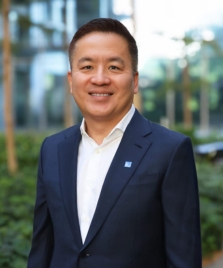
Kelvin Wong joined Surbana Jurong (SJ) as Group Chief Commercial Officer (GCCO) and Region Head, Asia, on 1 July 2026. As GCCO, Kelvin leads the Group’s commercial strategy, from market positioning and business development, through to client management and Commercial Risk Management. As Region Head, Asia, Kelvin directly manages SJ’s largest region, accounting for more than half of SJ’s business volume. Kelvin also oversees the business of all other regions of SJ.
Before joining SJ, Kelvin served as CEO of Singapore’s Building and Construction Authority (BCA) for 6 years. During his tenure, Kelvin led significant strides in industry transformation, with a strong focus on innovation, technology adoption and productivity improvement. BCA also led the adoption of productive technology and progressive practices, including greater adoption of robotics and automation.
Prior to his appointment at BCA, Kelvin enjoyed a 24-year successful career at Singapore’s Economic Development Board (EDB). He took on leadership appointments in different business clusters such as logistics, supply chain and connectivity, urban solutions and professional services as well as corporate strategy, policy and planning and human capital development.
Leon is the founder of Livingseas Asia and the Livingseas Foundation, with over 20 years of experience at the intersection of marine conservation and regenerative tourism. His work focuses on transforming how travellers engage with the ocean while restoring ecosystems that support local communities.
Under his leadership, Livingseas Asia operates one of Bali’s largest coral restoration projects, with over 50,000 m² of reef under active rehabilitation in Padang Bai. The initiative has contributed to significant coral recovery, increased fish biodiversity, and a model where every dive or snorkel experience directly supports conservation efforts.
Leon is known for integrating restoration into the guest experience, including hands-on coral planting that fosters meaningful environmental connections. He also champions community development by training and employing local dive professionals, creating sustainable livelihoods while reducing reliance on marine extraction.
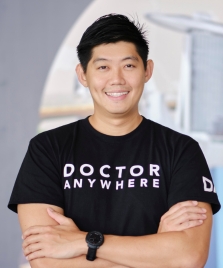
Mr. Lim Wai Mun is the Founder and CEO of Doctor Anywhere, a Singapore-based omni-channel healthtech and insurtech company integrating healthcare, insurance, and AI-enabled employee benefits across Southeast Asia. A mechanical engineering graduate from the National University of Singapore, he began his career in finance — three years with Standard Chartered Private Equity, followed by nine years at Temasek Holdings, where he helped conceive and launch Pavilion Energy.
In 2017, he founded Doctor Anywhere, which today serves over 3 million users across the region through digital and physical care channels, including primary care, specialist services, health screening, home-based care, and insurance-integrated benefits.
The company has been recognised on the Financial Times High-Growth Companies Asia-Pacific list, LinkedIn’s Top Startups in Singapore, and received NHIC’s Rising Star Healthcare Innovation Tribute 2024. Wai Mun was named EY Entrepreneur of the Year 2022 Singapore. He also mentored founders and served as a resident judge on CNA’s The Big Spark.
Lena Lee is the Executive Vice President, Attractions & Destination Experience at Resorts World Sentosa (RWS), where she leads the strategy, operations, and continued evolution of the resort’s attractions and guest experiences. With nearly two decades of international experience, she has built a strong track record across theme parks, integrated resorts, and global live events in Asia and the United States.
Prior to RWS, Lena was Senior Vice President of Park Operations at Universal Studios Japan, where she oversaw large-scale operations spanning attractions, guest experience, food and beverage, and major seasonal programs.
Lena’s career includes the opening of Resorts World Sentosa and Universal Studios Singapore, as well as global events such as the Beijing Olympics, the International Champions Cup and the NBA. She is passionate about building high-performing teams, fostering inclusive leadership, and delivering innovative, guest-centric experiences at scale.
Max Ng is the Executive Director of Tong Seng Produce, a leading Singapore-based importer and distributor of staple food commodities. As part of the second-generation leadership, he plays a key role in driving the company’s strategic growth, operational excellence, and regional expansion.
With a strong foundation in both business strategy and operational execution, Max has strengthened Tong Seng’s position as a trusted partner across the food supply chain, serving retailers, F&B operators, and institutional clients. He is particularly focused on building resilient systems, advancing digitalisation, and fostering long-term industry partnerships.
Beyond Tong Seng Produce, Max leads the development of BRICO, the company’s upstream rice milling vertical, enhancing integration from sourcing to distribution. His work elevates the global positioning of premium Cambodian rice while supporting farming communities.
Max also collaborates with government and industry bodies to advance Singapore’s food security agenda and explore regional growth opportunities.
Mohan Belani is the Co-founder and CEO of e27, a startup and tech ecosystem platform facilitating the growth of tech companies across Southeast Asia. To date, e27 has partnered with the top global tech corporates and helped hundreds of startups across SEA scale their companies through fundraising, media visibility, business matching programs and getting connected to customers, partners and governments.
Mohan is also a Partner at Orvel Ventures, a network driven venture capital firm investing in early-stage technology startups in Southeast Asia. Both personally and through Orvel, he’s invested in over 30 early stage funds and startups across APAC and US and enjoys working with Founders and helping them alleviate the challenges of building great companies specifically around the areas of funding and market access.
Ollie Wang is the Director of REVL Singapore, the master franchisee for REVL Training in Singapore. Since launching the brand’s first studio in 2022, he has led its growth to 17 locations, establishing REVL as one of Singapore’s leading boutique fitness communities. Under his leadership, the organisation has combined high performance training with meaningful community engagement, innovation and social impact.
Beyond studio operations, Ollie has pioneered large-scale fitness experiences that unite people through purpose. Through strategic partnerships with charities and community organisations, REVL Singapore has raised over S$500,000 for causes including cancer support, mental health, women’s empowerment and disadvantaged communities. Most notably, he introduced Battle Cancer to Singapore, demonstrating how fitness can be a platform for community building and meaningful social impact.
Passionate about leadership, Ollie believes exceptional organisations are built by empowering people and creating environments where teams and communities feel connected to something greater than themselves.
Ms Ong Huey Hong assumed the position of Assistant Chief Executive, Industry Development Group, in September 2024. She was previously Assistant Chief Executive, Policy and Planning Group. As head of the Industry Development Group, she leads the development for core tourism industries such as hotels, travel agents, tourist guides, and MICE. She oversees tourism sector human capital strategies, as well as infrastructure planning and management of key tourism assets like the integrated resorts, MICE venues and cruise terminals.
As Chief Sustainability Officer from to May 2023 to December 2025, she championed strategy implementation efforts to transform Singapore into a sustainable tourism destination.
From 2007 to April 2023, Huey Hong held various portfolios including Executive Director of Industry Technology Transformation, Director of Hotels and Sector Manpower, Director of Cruise and Director Corporate Planning.
Huey Hong holds a Bachelor of Engineering (First Class Honours) in Naval Architecture (1996) from the University of Newcastle Upon Tyne, UK. She has a Master of Business Administration (Banking and Finance) from Nanyang Technological University.
Ong Tze Boon began his career at the renowned Frank O. Gehry & Associates before returning to Singapore to join ONG&ONG as an architect. In 2007, he was appointed Group Executive Chairman, where he led the transformation of the firm into a fully integrated, multidisciplinary practice. By introducing a 360-degree design approach, Tze Boon successfully expanded ONG&ONG’s presence across key cities in Asia, strengthening its reputation as a leading design and consultancy group.
In 2019, he founded Charge+, a leading provider of integrated electric vehicle charging solutions across Singapore and Southeast Asia, supporting the region’s transition to sustainable mobility. He later established BeyondX Labs in 2024, a startup incubator dedicated to nurturing the next generation of entrepreneurs and innovators.
Beyond his business ventures, Tze Boon is actively involved in philanthropy through the ONG Foundation, supporting initiatives that create positive social impact.
Rachel leads APAC (ex-India) Alliances for the Google DeepMind Impact Accelerator, which focuses on empowering humanity to navigate the risks and harness the benefits of frontier AI. Our team engages partners to use Google DeepMind’s frontier AI models to pioneer social impact, accelerating discoveries in health and life sciences, climate and sustainability, and ensuring that education in an age of AI remains inclusive and accessible.
A Master’s graduate from the University of Sydney, Richard has been involved in ‘live events’ for the past 25 years. He has launched numerous exhibitions, conferences, training events and digital communities over a broad range of industries throughout Asia Pacific.
Richard is currently the CEO of Clarion Events Asia and his role is to expand Clarion’s footprint in the region via organic growth, launch and via acquisition. He has held this role since 2014. He has oversight of Clarion’s Shanghai business, Clarion’s Indonesian business and the Clarion business in Singapore. He was previously the CEO of Terrapinn Asia Pacific. He has lived and worked in Singapore since 1995 and has been a permanent resident since 2004.
Richard is also the President of the Singapore Association of Convention & Exhibition Organisers & Suppliers (SACEOS). He has led the association and industry through the re-opening post pandemic, helping drive key initiatives and events such as the MICE Sustainability Roadmap, MICE Internship Best Practices Guidelines and the Asia CEO Summit. He was a committee member of the TR 84 Standards Committee and led the rolling out of the SafeEvent Management courses. Over 3200 certified SG SafeEvent Ambassador have been trained during Covid-19.
As a strong advocate for training and education, Richard has regularly trained both exhibition and conference management to industry, and previously served as Vice President for Professional Development at SACEOS.
He has also provided consultation to a number of business media companies in Asia Pacific focusing on strategy and performance improvement.
Richard has pitched, won and managed joint venture partnerships with some of the region’s and world’s largest trade associations and governments and has led various M&A transactions in the region.
Stuart has spent the last 11 years establishing an immersive culture in Singapore, bringing over 65 innovative concepts to life. As a visionary in the field of immersive dining, Stuart has continually pushed the boundaries of the genre. As the co-founder of ANDSOFORTH, he and his wife, Emily Png, transformed the company from hosting pop-up events to launching Restaurant Absurdities, the world’s first multi-sensory, multi-room, fun-dining immersive Omakase.
In 2021, Stuart was the creative force behind Absurdities Vol. 1, an immersive dining experience that garnered international acclaim by winning the prestigious THEA Award for Outstanding Achievement in Immersive Dining Experience (Limited Budget). The THEA Awards, presented by the Themed Entertainment Association, are among the most prestigious accolades in the themed entertainment industry, recognising exceptional projects worldwide. This award placed Absurdities alongside other notable winners such as Universal Beijing and Disney’s Star Wars: Galactic Starcruiser, further solidifying Stuart’s impact on the global immersive dining scene.
Stuart also produced and directed the Around the World in 80 Days Book Analysis Workshop, hailed as possibly the most immersive, interactive workshop in the world. This sold-out experience and its three-year run from 2020 to 2023 provided the evidence and confidence needed to double down on creating Andsoforth intellectual properties.
Currently, ANDSOFORTH, with the support of the Singapore Tourism Board, has taken over a 25,000 sqft property in the heart of Singapore to create A141: A Immersive Lifestyle Retail hub. A141 will host Absurdities IPs, location-based entertainment tenants, interactive art exhibitions, and feature an immersive 3D anamorphic outdoor 15m by 3.5m screen.
Sukumar is currently Managing Director – Maritime, Energy & Industrial for Informa Markets in Singapore, and Honorary Secretary at SACEOS, the Singapore Association of Convention and Exhibition Organiser’s & Suppliers. His responsibilities within Informa Markets include a portfolio of B2B tradeshows, international outbound sales management, and sustainable events implementation. His 20+ years of MICE experience include delivery of conferences and tradeshows across the world. Sukumar is also Co-Chair of the Singapore MICE Sustainability Committee driven by Singapore Tourism Board, and a member of the Industry Advisory Committee for the Hospitality Business Programme at Singapore Institute of Technology.
Su-Ren Neo is a business leader and full-stack marketer with over two decades of experience driving growth across Asia and the US. Having held senior roles at LinkedIn, Twilio, Qualcomm, Sony, and HSBC, she has built her career at successive inflection points – the rise of digital, mobile, 4G, omnichannel customer engagement at scale, and now AI and the future of work.
Currently serving as Group Head of Marketing for LinkedIn Sales Solutions in Asia Pacific, Su-Ren leads strategy and execution helping organizations harness LinkedIn’s network and data to accelerate revenue and deepen customer relationships. She works at the intersection of human potential and technology-driven transformation — helping organizations navigate how AI is reshaping the way revenue is built, relationships are forged, and talent is leveraged. She brings both strategic perspective and practitioner experience helping teams adapt, build AI-forward organisations, and lead with confidence in a rapidly changing world.
A purpose-driven leader, Su-Ren is a passionate advocate for inclusive economic opportunity, particularly for women and underrepresented communities.
Tan Chuan Jin brings over two decades of senior leadership experience across public service, the military, business, and civic institutions, including service as Speaker of Parliament and Cabinet Minister in Singapore, President of the Singapore National Olympic Council, and Brigadier-General in the Singapore Armed Forces. Today, he works as an entrepreneur, advisor, speaker, and facilitator.
Chuan Jin’s professional work focuses on three primary areas: delivering keynotes on leadership, strategy, and governance in uncertain environments; facilitating senior-level workshops on leadership culture, strategic communication, and decision-making; and providing executive, board, and expert advisory services regarding organizational transformation, stewardship, and governance.
Winnie Chan is the CEO and Co-founder of Bynd Artisan.
With a background in Economics, Winnie began her career in her family business manufacturing leather and paper goods, where she modernised operations, achieved ISO 9001:2000 certification, implemented SAP, and secured FSC accreditation. Under her leadership, the business doubled its revenue and strengthened cross-functional collaboration across a 71-year-old legacy enterprise.
In 2014, Winnie co-founded Bynd Artisan with James Quan to continue her grandfather’s legacy of leather and paper craftsmanship. Today, Bynd Artisan is a lifestyle brand offering personalised products and experiences that bring to life its vision of “Gifts for Every Occasion”, spanning personal gifting to bespoke corporate solutions.
Winnie is passionate about design, innovation, and community-building. She leads collaborations with creatives on exclusive designer collections, and curates panel conversations that bring together thought leaders and diverse audiences to share ideas, perspectives, and inspiration.
Xiong Lingyi is a Singaporean director, writer, and executive producer known for pioneering digital-first comedy and microdrama content through 01 Studio and Wah!Banana. She has created and produced a diverse portfolio of viral comedy skits, reality formats, and short-form dramas that resonate strongly with local audiences across YouTube, TikTok, and broadcast platforms. Her work reflects a deep understanding of audience engagement in the digital age, combining humor with sharp cultural insights.
Her productions have garnered multiple nominations at the Star Awards, including a win for Best Short Form Entertainment Programme in 2026, underscoring her impact on Singapore’s evolving media landscape. Lingyi is passionate about storytelling that blends humor, authenticity, and innovation, consistently pushing creative boundaries in new media. Through her work, she aims to produce content that is not only widely accessible but also culturally relevant, shaping how modern audiences consume and connect with entertainment.
Zachary Wang is a serial entrepreneur and recipient of the 2024 EY Entrepreneur of the Year Award, recognized for his leadership, innovation, and impact in building high-growth, technology-driven businesses. He is the co-founder and Chairman of Neuron Mobility, APAC’s leading shared micromobility company, and the founder of Rezeca Renewables, a leading residential and commercial solar provider in Singapore.
In 2024, Zachary co-founded Level3AI, which develops enterprise-grade AI agents for customer engagement across voice, email, and chat. Its ambition is to become the most trusted, go-to partner for enterprises transforming customer engagement through AI. Today, Level3AI works with leading APAC brands including Carousell, GetGo, yuu Rewards, Carsome and ShopBack.
He holds a Bachelor’s degree in Mechanical Engineering from the National University of Singapore.